
 WhatsApp Us

Finland vs Norway vs Iceland vs Sweden: Where Should Indians See the Northern Lights?
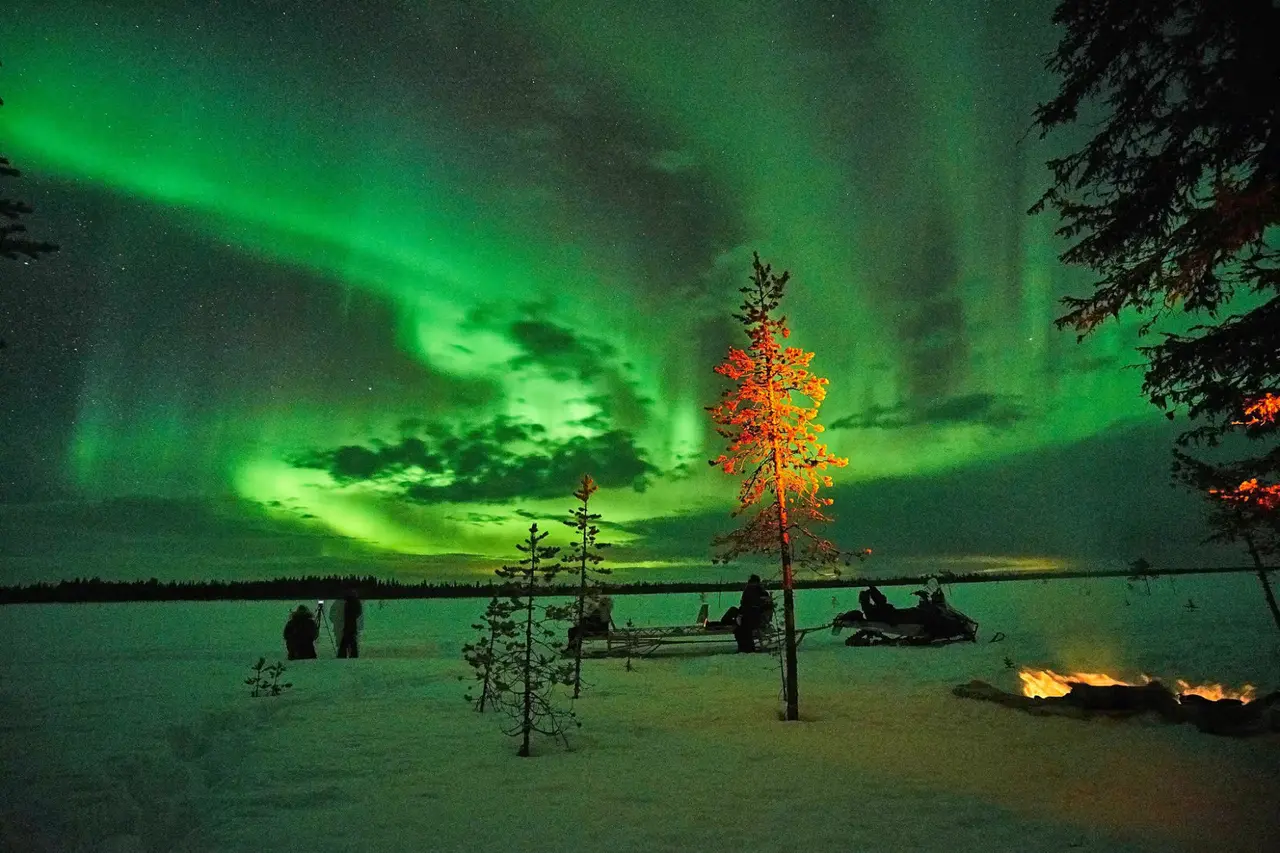
Finland, Norway, Iceland or Sweden: it's the question every Indian traveller planning a Northern Lights trip eventually asks. All four sit under the aurora, all four are a single Schengen visa away, and all four have beautiful photos online. But they're genuinely different trips: different weather, different cold, different costs, different daytime experiences, and very different journeys from India. This guide compares them honestly, so you can pick the right one, or the right combination.
Short answer: for the best overall odds and the easiest trip from India, combine Finnish Lapland, Swedish Lapland (Abisko) and Tromsø in Norway. You get three weather systems and the clearest-sky spot in Scandinavia on one route. Choose Finland alone for a family-friendly, Santa-and-igloo trip. Choose Iceland if dramatic landscapes matter as much as the aurora, and you're comfortable with more cloud and higher prices.
The one thing that matters most: clear skies
All four countries see the aurora regularly in season, from about late August to early April. Since solar activity is the same everywhere on a given night, the real differences come down to:
How often the sky is clear. Cloud, not a lack of aurora, ruins most trips. Dry inland areas generally beat wet, windy coasts.
How far under the aurora zone you are. The further inside the aurora oval you are, the weaker the activity you need for a visible display.
How many nights you get, and whether you can drive to clearer skies when your spot clouds over.
Keep those three in mind as we go country by country.
Finland (Finnish Lapland)
Where: Rovaniemi, on the Arctic Circle, and further north Inari, Saariselkä and Levi, plus the famous glass-igloo resorts.
Aurora odds: good, and better the further north you go. Northern Lapland sits well inside the aurora zone, so even low activity can show. Rovaniemi sits near the southern edge, so it benefits from a little more activity or a short drive out of town. Visit Finland says the lights appear on roughly every second clear night in autumn and spring.
Weather: inland and continental, so cold (often −10°C to −25°C in mid-winter), dry and frequently clear. It's reliably snowy from about November to March.
Getting there from India: the easiest of the four. Finnair flies nonstop from Delhi to Helsinki in roughly 9 hours, and from there it's a short domestic flight or an overnight train to Rovaniemi.
Daytime experiences: Santa Claus Village, husky and reindeer safaris, glass igloos, ice floating, Ranua Wildlife Park, and polar icebreaker cruises from Kemi in late winter.
Cost: about 21% above the EU average price level, among the more affordable of the four.
Vegetarian food: very manageable, especially in Helsinki and Rovaniemi. See our picks for vegetarian restaurants in Rovaniemi and Helsinki.
Best for: families with children, first-timers, and anyone who wants the full "winter wonderland" with the smoothest journey from India.
Sweden (Swedish Lapland: Abisko and Kiruna)
Where: Abisko National Park, about 200 km north of the Arctic Circle, and the mining town of Kiruna nearby.
Aurora odds: among the best in Europe. Abisko sits well inside the aurora zone, and it's famous for its "blue hole", a patch of often-clear sky over Lake Torneträsk. It forms because the surrounding mountains strip moisture out of incoming Atlantic weather. It's a strong tendency, not a guarantee, but it's why serious aurora photographers love Abisko.
Signature spots: the Aurora Sky Station, reached by chairlift up Mount Nuolja, and the original ICEHOTEL at Jukkasjärvi near Kiruna, rebuilt from river ice every winter.
Weather: cold and dry, similar to Finnish Lapland.
Getting there from India: usually via Stockholm or another European hub, then a flight to Kiruna, or the scenic overnight train north. On combined tours, it's an easy road transfer from Finland or Tromsø.
Cost: about 21% above the EU average, roughly the same as Finland.
Best for: maximising clear-sky chances, photographers, and pairing with Finland or Norway rather than going on its own.
Norway (Tromsø and the Arctic coast)
Where: Tromsø, the "capital of the Arctic", at almost 70° north. The Lofoten Islands and Alta are other options.
Aurora odds: excellent position. Tromsø sits right under the aurora oval, so even fairly quiet nights can produce a display overhead. The catch is that it's a coastal city with more cloud, so good guides drive inland, sometimes all the way to the Finnish border, to find clear skies.
Weather: surprisingly mild for the latitude, thanks to the Gulf Stream, often around −4°C in January. Polar night runs from about 27 November to 15 January, when the sun doesn't rise at all.
Daytime experiences: fjord cruises, whale-watching in early winter, the Fjellheisen cable car with views over the city, dog sledding and Sami culture.
Getting there from India: there are no direct flights. You connect via Oslo, Helsinki or another hub to Tromsø.
Cost: pricier, about 29% above the EU average.
Vegetarian food: doable. See our list of vegetarian and vegan-friendly restaurants in Tromsø.
Best for: travellers who want fjords and city life with their aurora, and those who don't like extreme cold.
Iceland
Where: across the island, from just outside Reykjavik to the remote north and east. Most visitors base themselves in Reykjavik or along the south coast.
Aurora odds: good, but weather-dependent. At about 63-66° north, Iceland sits under the aurora zone but slightly further from its core than Tromsø or Abisko. The bigger issue is Iceland's changeable, often cloudy Atlantic weather, which can bring several overcast nights in a row.
Weather: milder (Reykjavik is often around 0°C in winter) but windy and wet. Winter driving on icy roads is genuinely challenging, so self-drive isn't ideal for first-timers.
Daytime experiences: unmatched. The Golden Circle, black-sand beaches, waterfalls, the Jökulsárlón glacier lagoon, winter ice caves and geothermal lagoons. Iceland's daytime landscapes are the reason to choose it.
Getting there from India: there are no direct flights. You fly via a European hub to Keflavík (Reykjavik).
Cost: Europe's most expensive country, about 74% above the EU average. Food, drinks and activities are noticeably pricier than in Scandinavia.
Visa: a Schengen visa too. Applications in India go through VFS Global. See our Iceland visa requirements page.
Best for: travellers who care as much about landscapes as the aurora, repeat Arctic visitors, and those who are flexible on budget.
Head-to-head: how the four compare
Clearest skies: Sweden (Abisko) first, then inland Finnish Lapland, then Norway (coast) and Iceland.
Deepest under the aurora zone: Tromsø and Abisko, then northern Finnish Lapland, then Iceland and Rovaniemi.
Easiest from India: Finland, with nonstop Delhi-Helsinki flights. The other three need at least one connection.
Most affordable: Finland and Sweden, then Norway. Iceland is the most expensive.
Least cold: Iceland and coastal Tromsø. Inland Finland and Sweden are the coldest.
Best for kids: Finland, with Santa, reindeer, huskies and igloos.
Best daytime landscapes: Iceland, then the Norwegian fjords.
Easiest vegetarian food: Finland (Helsinki and Rovaniemi), then Tromsø and Reykjavik.
Why combining countries beats picking one
Here's the insight most first-timers miss: you don't have to choose. Finnish Lapland, Abisko and Tromsø are close enough to link by road in a single week, and they often have different weather on the same night. When Tromsø is clouded in by coastal weather, Abisko's blue hole or inland Finland may be clear. Spreading your nights across three locations is the single most effective way to protect your chances, far more than picking the "best" country.
It also gives you the best of each: Santa and igloos in Finland, the ICEHOTEL and Sky Station in Sweden, and fjords and the cable car in Norway. One Schengen visa covers it all.
That's exactly how we built our signature route. Chasing the Lights, Scandinavia Edition spends 3 nights in Finland, 2 in Sweden and 2 in Norway, with four separate aurora hunts (Rovaniemi, Kiruna and two in Tromsø) and a night at the Abisko Sky Station. The March Ice Breaker Special follows the same three-country route and adds a polar icebreaker cruise. It's also running in November 2027. For a longer loop, Arctic Lights & Lapland Magic links Stockholm, Abisko, Kiruna, Rovaniemi and Helsinki by sleeper train, with a day in Tallinn.
Prefer a single country? Pick by priority
Finland only: ideal for families and a gentler pace. Our private Lapland Adventures: Northern Lights Hunting in Finland covers Rovaniemi, Ranua, a glass igloo in Inari and Helsinki.
Norway and Finland: our private Scandinavia & Northern Lights pairs Bergen, the Flåm Railway and Tromsø with Lapland and a day in Tallinn.
Iceland: our private Iceland Complete: The Full Ring Road Experience loops the whole island, best booked between late September and March if the aurora is your goal.
Practical notes for Indian travellers
Visa: all four are Schengen countries, so one visa covers a multi-country trip. Apply to the country where you spend the most nights. Our Schengen visa guide for a Northern Lights trip explains how to choose, and the document lists are on our Finland, Sweden and Norway visa pages.
When to go: the season is the same in all four, about late August to early April. Our month-by-month guide to the best time to see the Northern Lights covers darkness, snow, the moon and the equinoxes, and November vs March compares our two main departures.
Budget: see the line-by-line cost of a Northern Lights trip from India.
Packing: inland Lapland is far colder than Iceland or Tromsø, so pack for the coldest stop. Our Arctic winter packing list covers it.
Food: vegetarian or Jain? Read our guide to vegetarian and Jain food on a Northern Lights trip.
Where to stay: our hotel guides for Rovaniemi, Tromsø and Helsinki cover the best-located options.
The verdict
If you want one trip that gives you the best chance of seeing the Northern Lights, don't bet everything on one country. Combine Finnish Lapland, Abisko and Tromsø for three weather systems, the clearest skies in Scandinavia, and the most variety by day. If you'd rather keep it simple, Finland is the easiest and most family-friendly single choice from India, while Iceland is the pick when glaciers and waterfalls matter as much as the lights.
For everything else, from flights and visa to costs and departures, read our complete Northern Lights tour from India guide. Still deciding? Talk to our Northern Lights team and we'll match the country, or countries, to your dates, budget and family, or customise an aurora trip of your own.
Frequently Asked Questions
Which country is best to see the Northern Lights from India?
There is no single winner. Sweden's Abisko is known for the clearest skies, Norway's Tromsø sits right under the aurora zone, Finnish Lapland is the easiest to reach from India with the most family-friendly activities, and Iceland pairs the aurora with spectacular landscapes but has more changeable, cloudier weather. For the best odds, many Indian travellers combine Finland, Sweden and Norway on one trip.
Is Iceland or Finland better for the Northern Lights?
Finland usually gives steadier odds and an easier trip. Inland Lapland has a drier, colder climate with more clear nights, Finnair flies nonstop from Delhi to Helsinki, and costs are noticeably lower. Iceland's weather is milder but more cloudy and changeable, there are no direct flights from India, and it is Europe's most expensive country, but its glaciers, waterfalls and ice caves are unmatched.
Is Norway or Finland better for the Northern Lights?
Tromsø in Norway sits further north, right under the aurora oval, so even modest activity can be visible, and its coastal climate is milder. But it is cloudier and pricier than Finnish Lapland. Finland offers colder, often clearer inland skies plus Santa Claus Village, glass igloos and huskies. Many tours combine both, because the two often have different weather on the same night.
Do I need separate visas for Finland, Norway, Sweden and Iceland?
No. All four countries are in the Schengen area, so Indian passport holders need one Schengen short-stay visa for the whole trip. Apply to the country where you will spend the most nights, or, if nights are equal, the country you enter first. For Iceland, applications in India are lodged through VFS Global.
Which is the cheapest Nordic country for a Northern Lights trip?
Among the four, Finland and Sweden are the most affordable day to day, at roughly 21% above the EU average price level in 2025 per Eurostat. Norway is pricier at about 29% above average, and Iceland is Europe’s most expensive country at about 74% above the EU average. Flights from India are also easiest and cheapest to Helsinki.
Where is the coldest place to see the Northern Lights?
Inland Finnish and Swedish Lapland are the coldest, often −15°C to −25°C in mid-winter and sometimes lower. Coastal Tromsø, warmed by the Gulf Stream, often sits around −4°C in January, and Reykjavik hovers around 0°C. Milder coastal places come with more cloud and wind, so dress for the conditions either way.
Made it to the end?