Are the Northern Lights guaranteed on this tour?+
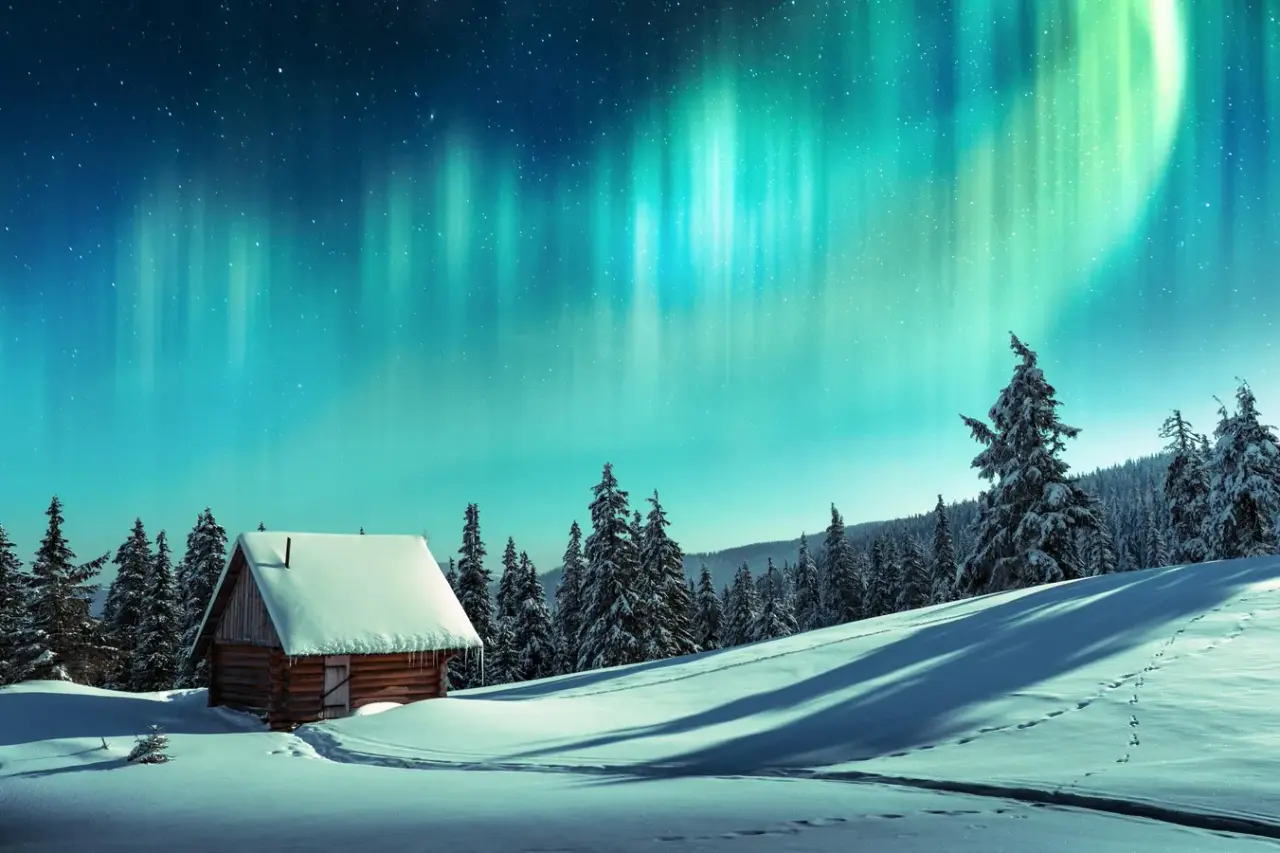
No honest tour operator can guarantee the aurora, and we won't either — it's a natural phenomenon that depends on solar activity and cloud cover. What we can do is stack the odds. This itinerary includes four separate aurora hunts across three countries — Rovaniemi, Kiruna, and two nights in Tromsø — instead of the single location most packages offer. If one region is clouded over, you still have three more chances in different weather systems, hundreds of kilometres apart.
What is the actual probability of seeing the aurora in November or March?+
On a well-planned multi-night Arctic trip during aurora season, most travellers see the lights at least once — but there is no fixed percentage, and anyone quoting one precisely is guessing. The real variable is cloud cover, not solar activity. A single night in one location is roughly a coin flip. Four nights across three countries changes the maths considerably, which is exactly why this itinerary is built the way it is.
Two things genuinely work in your favour on this trip:
The 2026–27 season sits in a strong window. Solar Cycle 25 peaked in October 2024, and while activity is now easing, the strongest solar events historically occur during a cycle's declining phase, sometimes years after the maximum. The 2026–27 winter remains inside a strong aurora window, even if displays are less relentless than at the 2024 peak.
Abisko is on the itinerary. It sits in a rain shadow created by the surrounding mountains, which is why it is one of the most reliably clear-sky aurora locations in the Arctic. Most India-based packages never go there.
Is November or March better for the Northern Lights?+
Both are strong; they're good for different reasons. November gives you long, dark nights early in the season, fresh snow, softer cold (around −5°C to −15°C in Lapland) and Santa Claus Village before the December crowds. March sits near the spring equinox, and the most intense geomagnetic activity often clusters around the September and March equinoxes — plus the sea ice is finally thick enough for the icebreaker cruise and ice floating, which physically cannot run in November.
How much does a Northern Lights trip cost from India, all in?+
Budget roughly ₹3.3–3.9 lakh per person, all-in, for this tour. The package itself is ₹2,59,000 (November) or ₹2,99,000 (March) per person on twin sharing.
Are flights from India included?+
No — international flights are not included in the package price. The tour begins on arrival at Rovaniemi Airport (RVN) in Finland and ends at Tromsø Airport (TOS) in Norway, so you'll need a multi-city booking rather than a simple return. Most Indian travellers connect via Helsinki, Istanbul, Doha or Dubai. We'll help you choose flights that land in time for the group transfer and advise on the right connection — just ask on WhatsApp before you book.
What visa do Indian citizens need for Finland, Sweden and Norway?+
One Schengen visa covers all three countries — Finland, Sweden and Norway are all in the Schengen Area, so you don't need separate visas. The fee is €90 for adults and €45 for children aged 6–12, with under-6s exempt, and processing typically takes 15–30 days (minimum 10, maximum 45).
How cold does it get and what should I pack?+
Expect −5°C to −15°C in November and −10°C to −25°C in March, with Abisko and Kiruna the coldest points and Tromsø the mildest (it's coastal, warmed by the Gulf Stream, often hovering near 0°C). Standing still on an aurora hunt at midnight is the coldest you'll feel all trip.
The system that works is three layers, and cotton in none of them:
Base — merino wool or synthetic thermals, top and bottom. Cotton holds sweat against your skin and will make you genuinely cold.
Mid — fleece or down jacket.
Outer — windproof, waterproof insulated jacket and trousers.
Is vegetarian and Jain food available?+
Yes — and this is something we plan for specifically, because it's the question Indian travellers ask us most. Every hotel on this itinerary serves a breakfast buffet with vegetarian options, and we brief each property about the group's requirements before arrival. Rovaniemi, Tromsø and Helsinki all have genuinely good vegetarian and vegan restaurants, which we've visited and reviewed ourselves.
What is a polar icebreaker cruise?+
It's a cruise aboard a real Arctic icebreaker that sails out onto the frozen Gulf of Bothnia and smashes through thick sea ice — these vessels plough through ice up to 1.2 metres thick. You're not sailing around ice; you're sailing through it, and the sound and vibration of a ship breaking sea ice is something you feel through the deck.
During the cruise you get a guided tour of the vessel including the bridge and engine room, you step off onto the frozen sea and walk on it, and you can try ice floating. At the end the captain presents a cruise certificate.
This is the single biggest reason to choose the March departure over November — the icebreaker only operates from roughly December to April, because the sea has to actually freeze first.
Is ice floating safe?+
Yes — you wear a sealed thermal survival suit that keeps you dry, insulated and buoyant, and you float on the surface rather than swim. You cannot sink in it. Trained staff supervise the whole thing, and no swimming ability is needed. Most people describe it as oddly peaceful: lying back in an open channel of Arctic sea, surrounded by ice, completely warm.
Practical points:
You don't need swimwear. The suit goes over your clothes.
Minimum height 140 cm to fit the flotation suit.
Entirely optional — plenty of people stay on the ice and take photos instead, and nobody minds.
Not recommended for pregnant travellers or anyone with a serious medical condition. The operator's staff assess each participant and have the final say.
Can children and senior citizens do this trip?+
Yes — this is a comfortable coach-based tour, not a trekking expedition, and both families and older travellers travel with us regularly. There's no walking longer than a short stroll, transfers are by heated air-conditioned coach, and all hotels are 4-star.
For children: the glass igloo stay is on quad sharing in a Family Glass Igloo, which suits families well. Santa Claus Village, the husky safari and the reindeer sleigh ride are all genuine highlights for kids. Note that ice floating has a minimum height requirement of 140 cm to fit the flotation suit, so smaller children sit that one out.
For senior travellers: the main consideration is cold tolerance and standing outdoors at night during aurora hunts, not mobility. Aurora hunts involve waiting outside in the cold, sometimes for an hour or more — though you can return to the warm vehicle
What happens if the aurora doesn't appear on a given night?+
We move, or we try again the next night — that's the whole point of building in four hunts. The aurora is driven by two things: geomagnetic activity and clear sky. We can't influence either, but we can chase the clear sky. Your trip leader tracks aurora forecasts and cloud maps nightly, and if conditions are better 60 km away, the coach goes there.

 WhatsApp Us