
 WhatsApp Us

Best Time to See the Northern Lights: Month-by-Month Guide
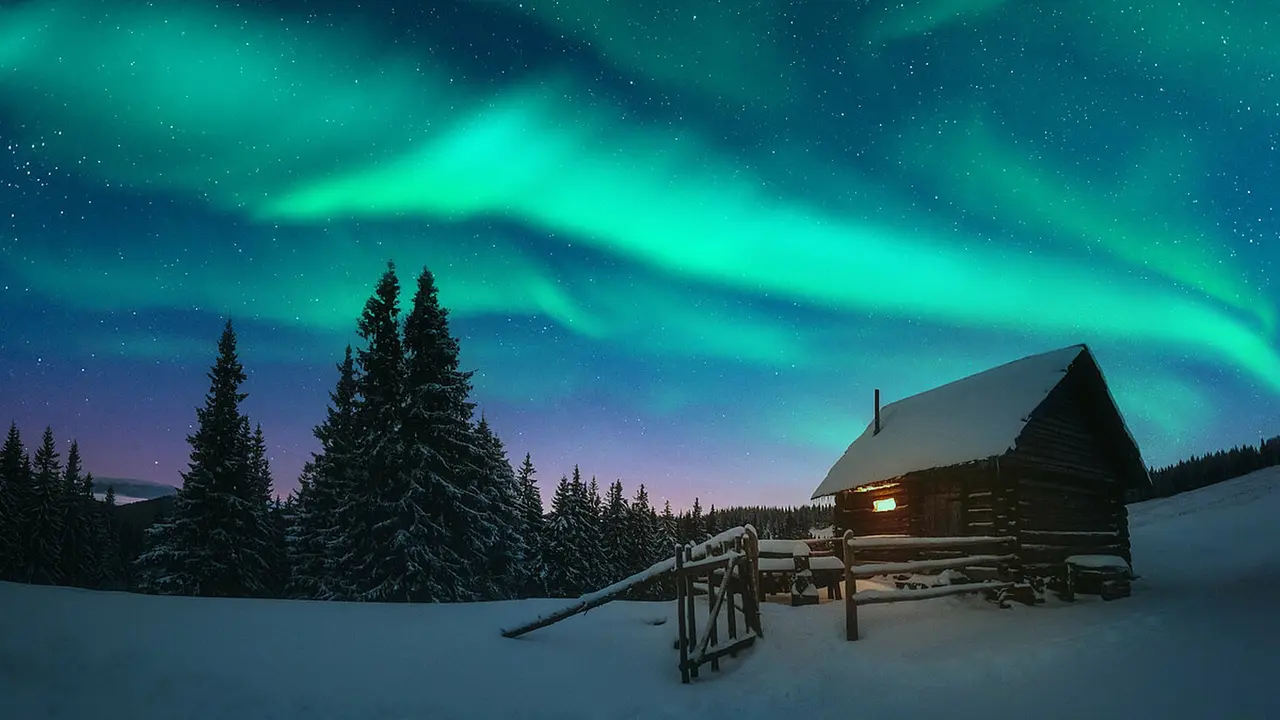
"When is the best time to see the Northern Lights?" is the first question almost every Indian traveller asks before booking an Arctic trip, and the answer decides whether your trip delivers. The aurora happens all year, but you can only see it when four things line up: darkness, clear skies, solar activity and a dark (ideally moonless) sky. This month-by-month guide shows how those factors change through the year in Finnish Lapland, Swedish Lapland and Arctic Norway, what each month feels like on the ground, and which month suits you.
Short answer: the Northern Lights season runs from about late August to early April. The best aurora windows are September-October and February-March, around the equinoxes. For the classic snowy Lapland experience, go between November and March. On any night, your best chance is a clear, moonless sky between roughly 9 pm and 2 am.
What actually decides your chances
Darkness: above the Arctic Circle, summer nights never get dark. From about mid-May to mid-August the aurora is there but invisible. Tromsø even has the midnight sun from roughly 18 May to 26 July.
Clear skies: the single biggest factor. A strong aurora behind cloud is invisible, while a modest one under a clear sky can be beautiful. This is why spending several nights in more than one place matters so much.
Solar activity: measured on the Kp index from 0 to 9. In northern Lapland, even a Kp of 1-2 can be enough for a visible display, because you're already under the aurora oval.
The moon: a bright full moon washes out fainter auroras. The darkest skies are in the week either side of the new moon.
The Northern Lights month by month
Late August and September: the season opens
Nights become dark enough again from the end of August. By September, Lapland has long autumn evenings, ruska (autumn colours), mild temperatures around 5-10°C, and unfrozen lakes, so on a calm night you can see the aurora reflected in the water. The September equinox (around 22-23 September) tends to bring higher geomagnetic activity. Visit Finland notes that in autumn and spring the lights are visible on roughly every second clear night. The trade-off is that there's no snow, and no huskies on snow or frozen-lake activities.
Best for: photographers, hikers, and anyone who wants aurora without deep cold.
October: strong activity, the first frost
October is one of the statistically strongest months for aurora activity, still riding the equinox effect. Nights lengthen quickly, temperatures drop to around 0°C, and the first snow often arrives late in the month. It's quieter and cheaper than winter, though it can be cloudier and slushier.
Best for: value-seekers and serious aurora hunters who don't need a snowy landscape.
November: snow arrives and the nights get long
Snow usually settles across Lapland during November, and the "winter wonderland" begins. Rovaniemi gets only about 6 hours of daylight on average, so you have long dark evenings for aurora watching. Temperatures typically range from about −5°C to −15°C. In Tromsø, polar night begins around 27 November, when the sun stays below the horizon for about seven weeks. Christmas markets and Santa Claus Village are in full swing, but the big holiday crowds and prices haven't arrived yet.
Best for: first-timers and families who want snow, Santa and long nights at sensible prices. Our November Scandinavia departure is built around this window.
December: the darkest, most festive month
December is the heart of the polar night. Rovaniemi averages only about 3 hours of daylight, and Tromsø sees no sunrise at all, just a few hours of soft blue twilight at midday. That means the darkest hours of any month, but it's also cold (around −10°C or lower inland) and the most expensive and crowded time, especially around Christmas and New Year.
Best for: a Christmas-in-Lapland trip. Book months ahead.
January: deep cold and clear, crisp nights
January is usually the coldest month. Inland Lapland regularly drops to −20°C and below, while coastal Tromsø, warmed by the Gulf Stream, often sits around −4°C. Very cold, high-pressure spells often bring clear skies, which is great for aurora. The polar night ends in Tromsø around 15 January, and after the New Year rush, prices ease off.
Best for: travellers who handle the cold well and want quieter, cheaper dates.
February: snow, light and colder clear nights
Daylight returns fast, to about 8 hours in Rovaniemi on average, so you get bright snowy days for huskies, reindeer and snowmobiles, plus long dark nights. Snow is deep and reliable, and temperatures sit around −10°C to −20°C. From late February, the sea ice in the Gulf of Bothnia makes icebreaker cruises possible.
Best for: people who want everything: activities by day, aurora by night.
March: the all-rounder
For many experienced aurora travellers, March is the sweet spot. You get around 12 hours of daylight, the deepest snow of the season, slightly milder cold (often −5°C to −15°C), frozen seas for icebreaker cruises, and the March equinox (around 20 March), which is often among the most geomagnetically active periods of the year. Nights are shorter than in December, but still long enough for several hours of aurora watching.
Best for: photographers, snow lovers and anyone who wants the most complete Arctic experience. Our March Ice Breaker Special runs in this window.
April: last chances
Aurora sightings are still possible in northern Lapland in the first week or two of April, but the nights shorten quickly, and by mid-April your chances fall sharply. Snow lingers and spring skiing is lovely, but don't plan an aurora-first trip this late.
Mid-April to mid-August: no aurora viewing
The sky above the Arctic Circle simply doesn't get dark enough. This is midnight-sun season, which is beautiful for hiking and fjords but not for the Northern Lights.
Which month is best for you?
First trip, with kids or parents: November or early December, for snow, Santa and long nights before the Christmas peak.
Photographers and aurora purists: September-October or March, for equinox activity. Choose March if you also want snow.
Snow and activities lovers: February-March, for the deepest snow, more daylight and icebreaker season.
On a budget: October, mid-January or early November, avoiding Christmas, New Year and Indian school holidays.
Worried about the cold: November or March, which are milder than December-January, or choose a route that includes coastal Tromsø.
Torn between the two most popular departures? Our side-by-side comparison of Northern Lights in November vs March walks through the aurora odds, snow, daylight, activities and price.
Best time of night to see the Northern Lights
Most displays happen between about 9 pm and 2 am, and activity is often strongest around 10 pm to 1 am. Auroras can appear any time it's fully dark, though, sometimes as early as late afternoon in December. Dress warmly, give it a few hours, and keep an eye on the aurora forecast and the cloud map, not just the clock. Guided aurora hunts help here: guides drive to wherever the sky is clearing.
Moon phases: 2026–27 new-moon dates
For the darkest skies, plan around the new moon. The week either side is ideal, though strong auroras still show under a bright moon. Approximate new-moon dates for the 2026–27 season:
2026: around 11 September, 10 October, 9 November and 8-9 December.
2027: around 7 January, 6 February, 8 March and 6 April.
Happily for this season, our March 2027 departure (5-12 March) falls right around the 8 March new moon, close to the equinox, which is a very strong combination.
Why the equinoxes are so good
Scientists have known since the 1800s that geomagnetic activity tends to be higher around the March and September equinoxes. The leading explanation, the Russell-McPherron effect, is that the tilt of Earth's magnetic field relative to the solar wind lets more solar energy couple into our magnetosphere at those times of year. It isn't a guarantee, because the equinox can't create a storm out of nothing, but it does tilt the odds in your favour. Combine it with long dark nights and snow, and you can see why March is so popular.
Is 2026–27 a good season?
Yes. The Sun's 11-year cycle peaked around October 2024 and is now in its declining phase, but activity remains elevated, and some of history's strongest aurora storms arrived in the years after a peak. Don't wait for a "perfect" year. Clear skies, enough dark nights and more than one viewing location matter far more than the solar cycle on any single night.
Where to go, once you've picked your month
Timing is half the picture. The other half is location. Finnish Lapland (Rovaniemi and the glass-igloo resorts) is easy to reach and full of activities. Abisko in Swedish Lapland is famous for its "blue hole" of clear sky, created by the surrounding mountains. Tromsø in Norway is milder and lively, with fjords on the doorstep. A route that combines two or three of these gives you different weather systems and the best overall odds. Our complete Northern Lights tour from India guide covers where to go, flights, visa and every departure.
2026–27 group departures, matched to the best windows
12-19 November 2026: Chasing the Lights, Scandinavia Edition. Early-winter snow, long nights, Santa Claus Village and Ranua Zoo, with four aurora hunts across Finland, Sweden and Norway.
27 February to 8 March 2027: Arctic Lights & Lapland Magic. A 10-day Sweden-Finland-Estonia route through deep late-winter snow, with aurora chases in Abisko and Rovaniemi and an icebreaker cruise, ending at the new moon.
5-12 March 2027: Chasing the Lights, Ice Breaker Special. Close to the equinox and the new moon, with a polar icebreaker cruise.
12-19 November 2027: Scandinavia Edition 2027, for planning a year ahead.
Want your own dates? The private Lapland Adventures: Northern Lights Hunting in Finland tour can run in any month of the season, or you can customise an aurora trip around the moon and your leave.
Before you book
Budget: see the line-by-line cost of a Northern Lights trip from India. Season changes flight prices more than anything else.
Visa: winter is peak season at the visa centres, so read our Schengen visa guide for a Northern Lights trip and apply four to six weeks ahead.
Cold: what you pack depends on the month. Our Arctic winter packing list covers November-to-March conditions.
Food: vegetarian or Jain? Plan with our guide to vegetarian and Jain food in Lapland.
Still unsure which month fits your family, leave and budget? Talk to our Northern Lights team. We'll match your dates to the best aurora window and the right itinerary, or browse all group tours to compare.
Frequently Asked Questions
What is the best time to see the Northern Lights?
The aurora season in Lapland and Arctic Norway runs from about late August to early April, when nights are dark enough. The best overall windows are September-October and February-March, around the equinoxes, when geomagnetic activity tends to be higher. For a classic snowy trip, November to March is ideal. Within any month, aim for clear, moonless nights between about 9 pm and 2 am.
What is the best month to see the Northern Lights?
There is no single best month, because clear skies matter most. March is a strong all-round pick: equinox activity, deep snow, long nights still, and comfortable daylight for activities. September and October are excellent for aurora activity and lake reflections, but there's little or no snow. November and December suit first-timers and families who want the snowy, festive Lapland experience.
What time of night is best to see the Northern Lights?
Most displays happen between about 9 pm and 2 am, and activity is often strongest around 10 pm to 1 am. Auroras can appear any time it is fully dark, though, so stay out for a few hours, keep checking the sky, and be ready to go back out if the forecast improves.
Can you see the Northern Lights in summer?
Not in Lapland or northern Norway. The aurora happens all year, but from about mid-May to mid-August the sky above the Arctic Circle never gets dark enough, and Tromsø has the midnight sun from roughly 18 May to 26 July. Plan your trip between late August and early April.
Does the moon affect seeing the Northern Lights?
Yes. A bright full moon washes out fainter auroras, though strong displays still shine through. The darkest skies come in the week either side of the new moon. In the 2026-27 season, new moons fall around 9 November, 9 December, 7 January, 6 February and 8 March.
Is 2026-27 a good year to see the Northern Lights?
Yes. The Sun's current cycle peaked around October 2024 and activity is still elevated as it declines, and some strong aurora storms historically arrive in the years after a peak. Clear, dark skies and several nights in the aurora zone matter more than the solar cycle on any given night.
Made it to the end?