
 WhatsApp Us

Northern Lights Tour from India: Complete 2026–27 Guide
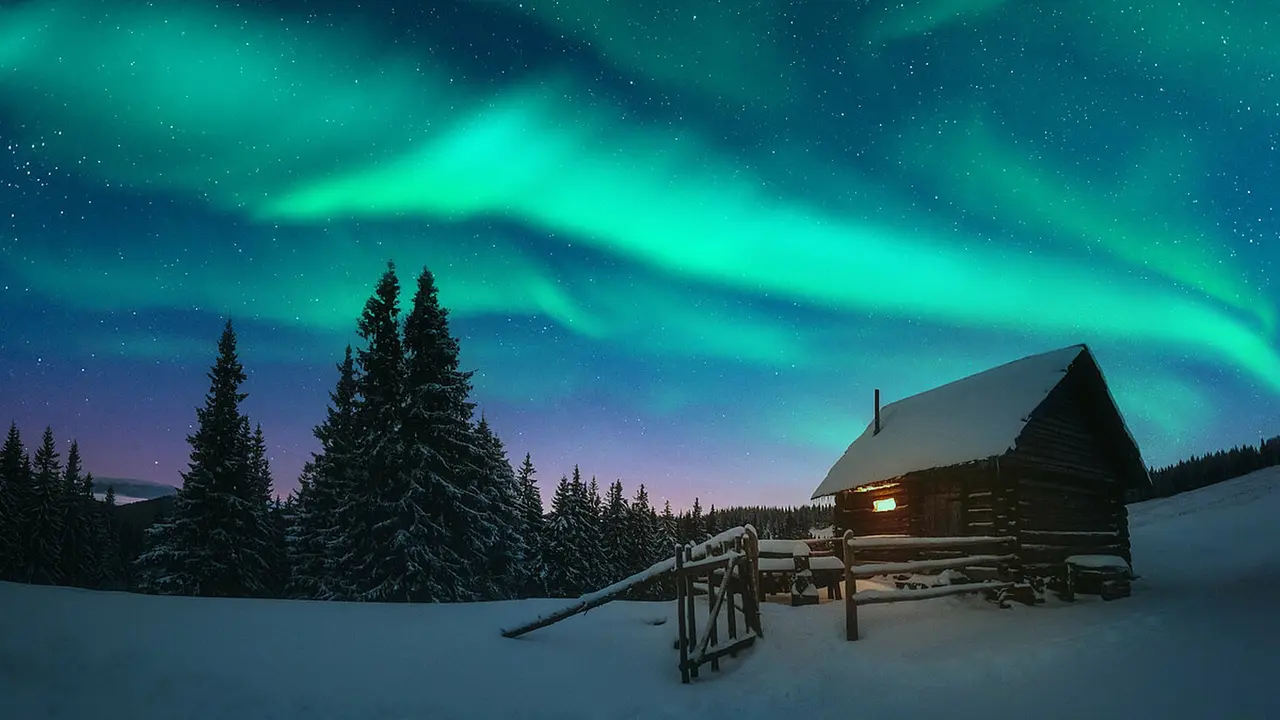
Watching green and violet light ripple across an Arctic sky is the one experience almost every Indian traveller puts on their bucket list. It's also the trip people most often get wrong: wrong month, wrong place, or one night of cloud and nothing to show for it. This Northern Lights tour from India guide brings everything together for the 2026–27 season: when to go, where the odds are best, honest chances of a sighting, what it really costs in rupees, the visa, flights, food, packing, and every group departure we're running.
Short version: go between November and March, spend at least 4-5 nights inside the aurora zone across more than one location, and budget roughly ₹3.8-4.2 lakh per person all-in for an 8-day Finland-Sweden-Norway tour, including flights and visa. You'll need a Schengen visa, applied four to six weeks ahead. Here's the full picture.
What are the Northern Lights, and where can you see them?
The Northern Lights, or aurora borealis, appear when charged particles from the Sun hit Earth's upper atmosphere and make it glow, usually green and sometimes pink, red or violet. They're concentrated in a ring around the North Pole called the aurora oval, roughly 65-70° north. To see them reliably, you need to be inside that ring, on a dark, clear night.
For Indian travellers, the most practical aurora regions are:
Finnish Lapland: Rovaniemi, the "official hometown of Santa Claus", plus the glass-igloo resorts further north. It's easy to reach, very family-friendly and packed with winter activities.
Swedish Lapland: Abisko, famous for unusually clear skies thanks to the mountains around it, and Kiruna, home of the original ICEHOTEL.
Tromsø, Arctic Norway: a lively coastal city with fjord cruises, a cable car with aurora views, and easy access to the countryside for aurora chasing.
Iceland: dramatic landscapes and good aurora odds in winter, though the weather is more changeable.
Best time for a Northern Lights tour from India
The aurora is technically there all year, but you can only see it when the sky is dark. Above the Arctic Circle, that means roughly September to early April.
September-October: autumn colours and milder temperatures, but little or no snow. Good for aurora, less "winter wonderland".
November: the first snow, long nights and pre-Christmas magic in Rovaniemi. A great first-timer month, and our most popular departure.
December-January: the darkest and coldest stretch, with polar night in the far north. It's spectacular but harsh, and Christmas pricing is at its peak.
February-March: deep snow, more daylight for activities, slightly milder cold, and frozen seas, which makes it icebreaker season. Equinox periods are often good for aurora activity too.
Can't decide between the two most popular windows? Our side-by-side guide to Northern Lights in November vs March compares weather, daylight, activities and price.
Is 2026–27 a good season?
Yes. The Sun runs on an 11-year activity cycle. The current cycle peaked around October 2024 and is now in its declining phase, but activity remains elevated, and some of history's strongest aurora storms came in the years after a peak. The bigger factor on any given night is still clear, dark skies, which is why where and how many nights matter more than the calendar year.
Are the Northern Lights guaranteed? Your honest odds
No one can guarantee the aurora, and you should be wary of anyone who does. Two things have to line up: enough solar activity, and a gap in the clouds. Clouds are the real enemy. A strong display behind thick cloud is invisible.
What genuinely improves your chances:
More nights in the aurora zone. One night is a gamble. Four or five nights changes the odds completely.
More than one location. Lapland's inland climate, Abisko's clear-sky pocket and coastal Tromsø often have different weather on the same night.
Guided aurora hunts. Local guides watch cloud maps and drive to where the sky is clear, which is very hard to do on your own in the Arctic.
Getting away from city lights, and being patient. Displays often build late in the evening.
This is exactly why our Scandinavia itineraries include four separate Northern Lights hunts: one in Rovaniemi, one in Kiruna and two in Tromsø, plus a night at the Abisko Sky Station.
2026–27 Northern Lights group tours from India
Here are the departures we're running this season. All are group tours with hotels, transfers, aurora hunts and activities arranged. Prices are per person on twin sharing.
November 2026, 12-19 Nov: Chasing the Lights, Scandinavia Edition. 8 days across Finland (3 nights), Sweden (2) and Norway (2), from ₹2,59,000. Includes a glass igloo, the ICEHOTEL and the Abisko Sky Station, a husky safari, a reindeer sleigh ride, ice floating, Santa Claus Village, Ranua Wildlife Zoo with polar bears, and a Tromsø fjord cruise.
Late February to March 2027, 27 Feb-8 Mar: Arctic Lights & Lapland Magic. A 10-day Sweden-Finland-Estonia circuit from ₹3,19,000, with two aurora chases (Abisko and Rovaniemi), two overnight sleeper trains, the Icehotel, a glass-igloo night, an icebreaker cruise at Kemi, Stockholm and a ferry day in medieval Tallinn.
March 2027, 5-12 Mar: Chasing the Lights, Ice Breaker Special. The 8-day Finland-Sweden-Norway route from ₹2,99,000, adding a 3-hour polar icebreaker cruise, with travel insurance and an e-SIM included. Seats are limited.
November 2027, 12-19 Nov: Scandinavia Edition 2027. The same itinerary as November 2026, for travellers planning a year ahead.
Prefer your own dates? Our private tours Lapland Adventures: Northern Lights Hunting in Finland (Rovaniemi, Ranua, a glass igloo in Inari and Helsinki) and Scandinavia & Northern Lights (Bergen, the Flåm Railway, Tromsø, Lapland and Tallinn) run on your schedule. For Iceland, see Iceland Complete: The Full Ring Road Experience. You can browse all private tours or check upcoming dates on the tour calendar.
Signature Arctic experiences to look for
The aurora happens at night. What makes a Northern Lights tour unforgettable is everything else you do by day. When you compare packages, check which of these are actually included:
Glass igloo night: watch the sky from bed through a heated glass roof.
ICEHOTEL, Kiruna: a hotel carved fresh from river ice every winter, where you sleep at around −5°C in thermal bags.
Abisko Aurora Sky Station: a chairlift up the mountain to a viewing station away from all light pollution.
Husky safari and reindeer sleigh ride: the classic Lapland experiences.
Ice floating: drift in a frozen Arctic lake in a full survival suit. It's surreal and surprisingly warm.
Polar icebreaker cruise (February-March only, when the sea is frozen): sail through the frozen Gulf of Bothnia.
Santa Claus Village on the Arctic Circle, and Ranua Wildlife Zoo to see polar bears.
Tromsø fjord cruise and the Fjellheisen cable car for views over the Arctic city.
How much does a Northern Lights tour from India cost?
For an 8-day Finland-Sweden-Norway group tour, the realistic all-in figure is about ₹3.8 lakh per person in November and ₹4.2 lakh in March, before TCS. Here's what sits on top of the package price:
Return international flights: ₹55,000-95,000. Book 3-4 months ahead for the lower end.
Schengen visa: about ₹9,000-12,000, including the €90 fee and VFS charges.
Travel insurance: ₹2,000-3,500 if your package doesn't include it. The March tour does.
GST and TCS on the package. TCS can be adjusted against your income tax.
Lunches and dinners: ₹18,000-30,000 for the week. Nordic restaurant meals aren't cheap.
We break every rupee down line by line in our guide to the cost of a Northern Lights trip from India, including the ways to bring it down.
Visa: you need a Schengen visa
Finland, Sweden and Norway are all in the Schengen area, so one Schengen short-stay visa covers the whole trip. You apply to the country where you spend the most nights. On our Lapland itineraries that's usually Finland, but always check your final itinerary. Apply four to six weeks before travel (and no more than six months ahead), because winter is peak season at the visa centres.
You'll need a passport valid for three months beyond your return, bank statements, ITRs, flight and hotel bookings, and travel insurance with at least €30,000 of medical cover. The full document checklist and timeline are in our Schengen visa guide for a Northern Lights trip, and the documents we need from you are listed on our Finland visa requirements page.
How to reach Lapland from India
Helsinki is the usual gateway. Finnair flies nonstop from Delhi to Helsinki in roughly 9 hours, and many travellers from other cities connect through the Gulf or other European hubs. From Helsinki, it's a short domestic flight north to Rovaniemi, or an overnight sleeper train, which is an experience in itself. Tromsø and Kiruna are linked by flights and, on our tours, by road through some of the most scenic Arctic landscape in Europe.
Surviving the cold: what to pack
Expect anything from about −5°C to −25°C depending on the month and location, colder on aurora nights. The secret is layering: thermal base layers, a fleece or down mid-layer, and a windproof, waterproof outer shell. Add insulated waterproof boots with a good grip, a warm hat, a neck gaiter, and two pairs of gloves (thin liners under warm outer gloves). Survival suits for ice floating and thermal bedding at the igloo and ICEHOTEL are provided on our tours, so you don't need to buy everything. Our complete Northern Lights packing list for Indians covers what to buy in India, what to rent there and what to leave at home.
Vegetarian and Jain food in the Arctic
Lapland menus lean heavily on reindeer, salmon and other meat. Vegetarians can manage with a little planning, and Jain and no-onion-garlic travellers should plan more carefully. Breakfast buffets are generous, supermarkets are well stocked, and the bigger towns have Indian and vegetarian-friendly restaurants. Read our survival guide to vegetarian and Jain food on a Northern Lights trip, then our city picks:
Where to stay
Beyond the signature igloo and ICEHOTEL nights, most of your stay will be in city hotels in Rovaniemi, Tromsø and Helsinki. Location matters more than you'd think in the Arctic: being close to the centre means less time walking in the dark and cold. Our hotel guides cover the best-located options:
Photographing the Northern Lights
Phones work well now. Use Night mode or a manual "Pro" mode with a 3-10 second exposure, and rest the phone on something steady or a small tripod.
On a camera: use a wide lens at its widest aperture, ISO 1600-3200 and 5-15 second exposures, with manual focus set to infinity.
Batteries die fast in the cold. Carry spares in an inside pocket, close to your body.
Turn off the flash, and keep torches pointed at the ground so you don't ruin everyone's shot.
Plan it in six steps
Pick your month: November for the first snow and Santa, February-March for deep snow and the icebreaker.
Choose a route with several aurora nights across more than one location.
Lock your tour seat with the deposit. Group departures fill months ahead.
Book flights 3-4 months out.
Apply for your Schengen visa four to six weeks before travel.
Shop for warm layers and boots, and plan your food if you're vegetarian or Jain.
Final word
A Northern Lights trip is a big investment, and it's worth doing properly: the right season, enough nights under the aurora oval, more than one location, and a route that fills your days with igloos, huskies and frozen seas, so the trip is magical even before the sky lights up. Compare our November Scandinavia departure and the March Ice Breaker Special, browse all group tours, or customise an aurora trip around your own dates. When you're ready, talk to our Northern Lights team. We've taken Indian families, couples and friends to the Arctic, and we'll help you plan every step.
Frequently Asked Questions
What is the best time for a Northern Lights tour from India?
The aurora season in Lapland and northern Norway runs from roughly September to early April, when nights are long and dark enough. For Indian travellers, November and February-March are the sweet spots: November brings early snow and long nights, while late February and March bring deeper snow, more daylight for activities and slightly milder cold. December and January are the darkest and coldest months.
How much does a Northern Lights tour from India cost?
VacMode's 8-day group tours across Finland, Sweden and Norway are priced at ₹2,59,000 (November) and ₹2,99,000 (March) per person on twin sharing. Once you add return flights (about ₹55,000-95,000), the Schengen visa (about ₹9,000-12,000), GST and meals beyond breakfast, budget roughly ₹3.8-4.2 lakh per person all-in, before TCS.
Is seeing the Northern Lights guaranteed on a tour?
No honest operator can guarantee the aurora, because it depends on solar activity and, above all, clear skies. You improve your odds by spending several nights inside the aurora zone, in more than one location, with guides who chase clear weather. That is why VacMode's Scandinavia tours include four separate Northern Lights hunts across Rovaniemi, Kiruna and Tromsø.
Is 2026-27 a good season to see the Northern Lights?
Yes. The Sun's current 11-year cycle peaked around October 2024 and is now in its declining phase, but activity is still elevated, and some of the strongest storms in past cycles came in the years after the peak. Clear, dark skies matter more than the solar cycle on any given night, so choose a long, dark-season trip with several viewing nights.
Do Indians need a visa for a Northern Lights trip?
Yes. Finland, Sweden and Norway are all in the Schengen area, so Indian passport holders need a single Schengen short-stay visa. You apply to the country where you spend the most nights, which is usually Finland on Lapland itineraries. The visa fee is €90 for adults, plus a VFS service charge. Apply four to six weeks before travel, and no earlier than six months ahead.
Where is the best place to see the Northern Lights from India?
The most practical aurora regions for Indians are Finnish Lapland (Rovaniemi and the glass-igloo resorts), Swedish Lapland (Abisko and Kiruna, known for clear skies) and Tromsø in Arctic Norway. Combining two or three of these on one trip gives you different weather systems and better odds than staying in one place.
Made it to the end?