
 WhatsApp Us

Vietnam Travel Guide for Indians: Visa, Cost & Everything You Need (2026)
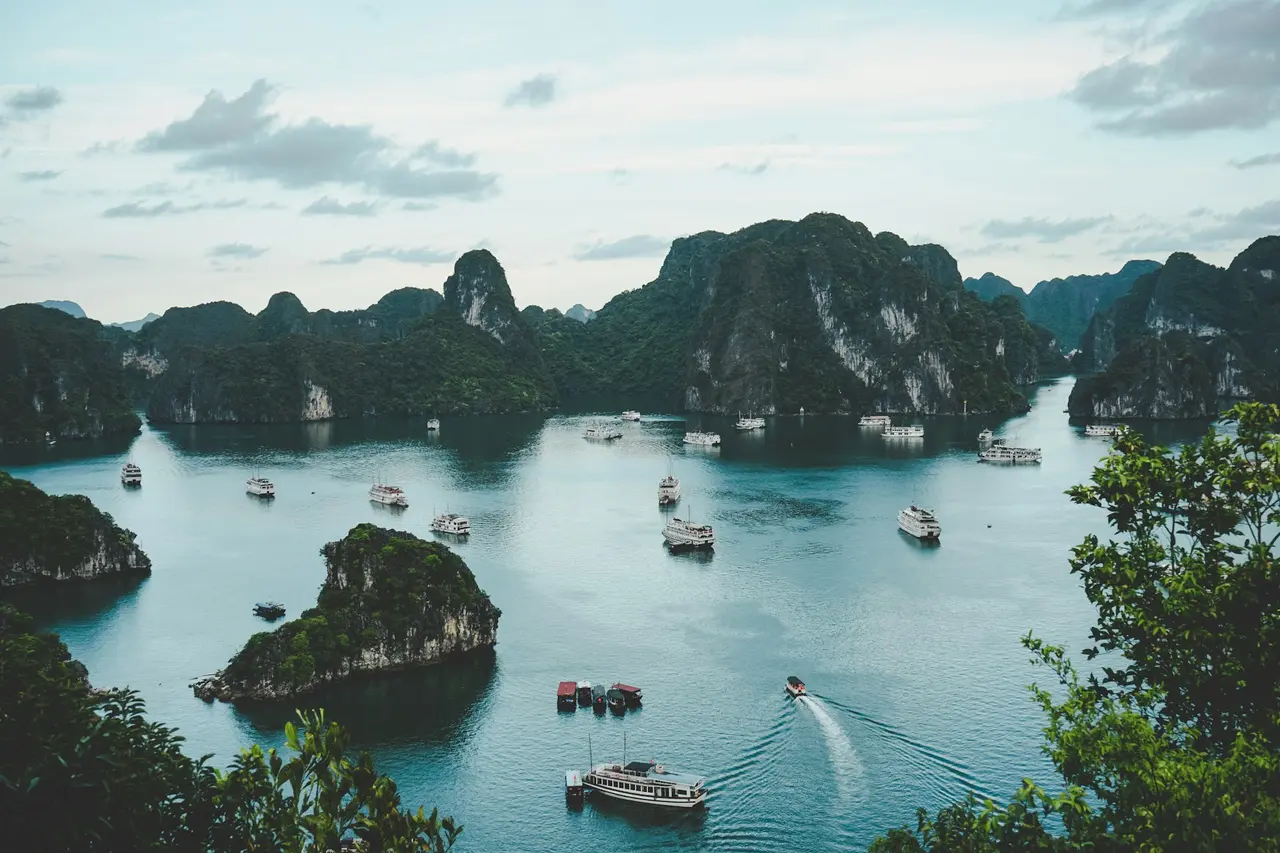
Vietnam is one of the best-value international trips an Indian traveller can take in 2026. Flights are short, the visa is online, and beaches, mountains and ancient towns all sit within one country.
This Vietnam travel guide for Indians covers everything you need to plan the trip: the e-visa, flights from India, costs in rupees, the best time to go, vegetarian and Jain food, and a region-by-region plan.
Short answer: most Indians see Vietnam comfortably in 6–8 days. You apply for the e-visa online, fly direct from several Indian cities, and spend roughly ₹70,000–1,20,000 per person including flights.
Vietnam for Indians at a glance
Visa: E-visa, applied online; about US$25 single entry
Direct flights from: Delhi, Mumbai, Kolkata, Bengaluru, Hyderabad, Ahmedabad
Flight time: About 4.5–5.5 hours from Delhi or Mumbai
Budget: ₹70,000–1,20,000 per person for 6–8 days, flights included
Best months: October to April; February to April for the whole country
Ideal trip length: 6–8 days for two regions, 10+ days for the whole country
Currency: Vietnamese Dong (VND); ₹1 ≈ 280–300 VND
Must-know word: "chay" means vegetarian
Do Indians need a visa for Vietnam?
Yes, but it is one of the simplest visas in Southeast Asia. You apply for the e-visa online on the official portal, evisa.gov.vn. It costs about US$25 for a single entry, usually arrives in 3 working days, and allows a stay of up to 90 days. Apply at least 10 working days before you fly, and carry a printed copy.
For documents, photo rules and each step of the form, read our full guide to the Vietnam visa for Indians.
How to reach Vietnam from India
Direct flights connect Vietnam with Delhi, Mumbai, Kolkata, Bengaluru and Hyderabad, operated by IndiGo, VietJet and Vietnam Airlines. Vietnam Airlines adds a direct Ahmedabad–Hanoi flight from 3 November 2026. Routes change by season, so check what flies from your city.
Flight time: about 4.5–5.5 hours from Delhi or Mumbai, and less from Kolkata, the closest major Indian city.
Fares: return economy usually costs ₹20,000–40,000 per person, less if you book early or travel off-peak.
Which airport: land in Hanoi (HAN) for the north (Halong Bay, Sapa, Ninh Binh), or Ho Chi Minh City (SGN) for the south (Mekong Delta, Phu Quoc). Fly into one and out of the other to avoid backtracking.
Best time to visit Vietnam from India
The best time for most Indian travellers is October to April, when most of the country is dry and pleasant. Vietnam is long and narrow, so each region has its own season.
North (Hanoi, Halong Bay, Sapa): best from October to April. December–February is cool and misty, so pack a light jacket.
Centre (Da Nang, Hoi An, Ba Na Hills): best from February to May, the driest months. It gets hot from June.
South (Ho Chi Minh City, Mekong, Phu Quoc): warm all year; the dry season, and the best time, is November to April.
For a trip covering all three regions, aim for February to April. It also fits Indian school holidays and long weekends.
Plan around Tet (Lunar New Year). Tet falls in late January or February (around 6 February in 2027). For about a week, many shops and restaurants close, transport and hotels get expensive, and e-visa processing pauses. Avoid travelling, or applying for your visa, during that week.
How much does a Vietnam trip cost from India?
A well-planned 6–8 day trip costs about ₹70,000–1,20,000 per person, including flights. Season and travel style move this number most.
Return flights from India: ₹20,000–40,000
E-visa: About ₹2,100 (single) or ₹4,200 (multiple)
Hotels, 3–4 star: ₹2,500–5,000 a night for a double room
Food: ₹600–1,500 a day
Local transport and activities: ₹1,000–3,000 a day
Travel insurance: Add this; medical care in Vietnam is expensive without it
Understanding the Dong. Vietnam uses the Vietnamese Dong (VND), and ₹1 is roughly 280–300 VND, so prices have many zeros. A quick trick: drop the last three zeros and multiply by 3–3.5. For example, 100,000 VND is about ₹340. Check the live rate before you go.
Money tips
Carry some US dollars to exchange in Vietnam; rates are usually better than at Indian airports.
Use ATMs for Dong rather than carrying large amounts of cash.
Keep cash for street food, markets and small towns, where cards are not always accepted.
Best places to visit in Vietnam, region by region
The most common mistake Indians make is trying to cover the whole country in five days. Pick one or two regions and enjoy them at a slower pace.
The North: Hanoi, Halong Bay, Sapa, Ninh Binh
Hanoi is the old capital, with Old Quarter lanes, lakes, egg coffee and busy street food. From there, an overnight Halong Bay cruise among limestone islands is the single most famous Vietnam experience. Add Sapa for terraced rice fields and hill-tribe villages, or Ninh Binh for boat rides through caves and paddy fields.
The Centre: Da Nang, Hoi An, Ba Na Hills
Da Nang has long sandy beaches and Ba Na Hills, home of the Golden Bridge held up by giant stone hands, a favourite with Indian travellers. Nearby Hoi An is a lantern-lit ancient town and one of the prettiest places in the country after dark.
The South: Ho Chi Minh City, Mekong Delta, Phu Quoc
Ho Chi Minh City (Saigon) is fast-paced, with war history, markets and nightlife, plus easy day trips to the Cu Chi Tunnels and the Mekong Delta. For a beach finish, Phu Quoc island has resorts, cable cars and sunsets.
Phu Quoc visa rule: Indians can stay on Phu Quoc for up to 30 days without a visa only if they fly in directly from abroad, stay on the island, and leave from there. If Phu Quoc is part of a wider Vietnam trip, your e-visa covers it. The Indian Embassy in Hanoi advises getting an e-visa even for Phu Quoc-only trips.
Vegetarian, Jain and Indian food in Vietnam
Vegetarians eat well in Vietnam, as long as they ask clearly. Vietnamese food is light, fresh and full of herbs: pho (noodle soup), banh mi (baguette sandwiches), fresh spring rolls and excellent coffee.
Vegetarians: fish sauce and meat or seafood stock are used widely, even in vegetable dishes. Look for the word chay (vegetarian). Most cities have com chay restaurants, often linked to Buddhist temples.
Jain and strict vegetarians: carry a note in Vietnamese saying no onion, garlic, root vegetables or fish sauce. Stick to chay and Indian restaurants.
Indian food: Hanoi, Ho Chi Minh City, Da Nang and Phu Quoc all have Indian restaurants, which helps on family trips with elders or kids.
Easy local picks: fresh spring rolls, veg pho, veg banh mi, fried rice and Vietnamese iced coffee.
Practical tips for Indian travellers
SIM and internet: buy a tourist SIM or eSIM on arrival; data is cheap and coverage is good in cities.
Getting around: use the Grab app for cars and bikes in cities. Between regions, take cheap domestic flights or sleeper trains and buses.
Payments: cards work at hotels and larger restaurants; keep cash for street food, markets and small towns.
Bargaining: expected in markets and with some vendors; stay polite and smile.
Plugs: Vietnam's sockets take Indian two-pin chargers, but not three-pin plugs such as laptop chargers. Carry a universal adaptor.
Travel insurance: buy a policy that covers medical care and trip cancellation before you fly.
Safety: Vietnam is safe and friendly for tourists, including solo travellers and families; take the usual care with belongings in crowds.
Packing: light cottons for the south and centre; a warm jacket for the north in winter and for Sapa and Ba Na Hills.
How many days are enough for Vietnam? Suggested itineraries
Six to eight days is enough for one or two regions; plan 10 or more days to see the whole country.
6–7 days: pick one or two regions, such as Hanoi and Halong Bay, or Da Nang, Hoi An and Ba Na Hills. Our group tour The Great Vietnam Run: Ba Na, Halong and Sa Pa covers the highlights without any planning on your side.
8–10 days: combine the north and centre, or add a beach finish. Grand Vietnam: Islands, Karsts & Ancient Towns covers the country at a relaxed pace.
Beach add-on: end in the south with Cable Cars & Coastlines: Phu Quoc Unplugged for a resort-style finish.
Want a trip built around your own dates, pace and budget? Customise a Vietnam trip with us, or browse all group tours.
Final word
Vietnam is one of the easiest and best-value first international trips for Indian families, couples and friends. Plan around each region's weather, don't overload your days, and remember the word chay. When you're ready to book, or just want advice, talk to our Vietnam travel experts: we plan these trips from India every week.
Frequently Asked Questions
Is Vietnam cheap for Indians?
Yes. A 6–8 day trip costs about ₹70,000–1,20,000 per person including flights, and hotels and food cost less than in Thailand or Singapore.
How many days are enough for Vietnam?
Six to eight days covers one or two regions comfortably. Allow 10 or more days to see the north, centre and south.
Which is the best month to visit Vietnam from India?
February to April works across the whole country. October to April is good for the north and south.
Is vegetarian food available in Vietnam?
Yes. Look for "chay" restaurants, and ask for no fish sauce. Indian restaurants are available in all major cities.
Is there a direct flight from India to Vietnam?
Yes. Direct flights run from Delhi, Mumbai, Kolkata, Bengaluru and Hyderabad, with Ahmedabad–Hanoi starting in November 2026.
Do Indians need a visa for Vietnam?
Yes. Vietnam is considered safe and welcoming for tourists, including families and solo travellers.
Made it to the end?