
 WhatsApp Us

Philippines Travel Guide for Indians: Visa, Cost, Islands & Tips (2026)
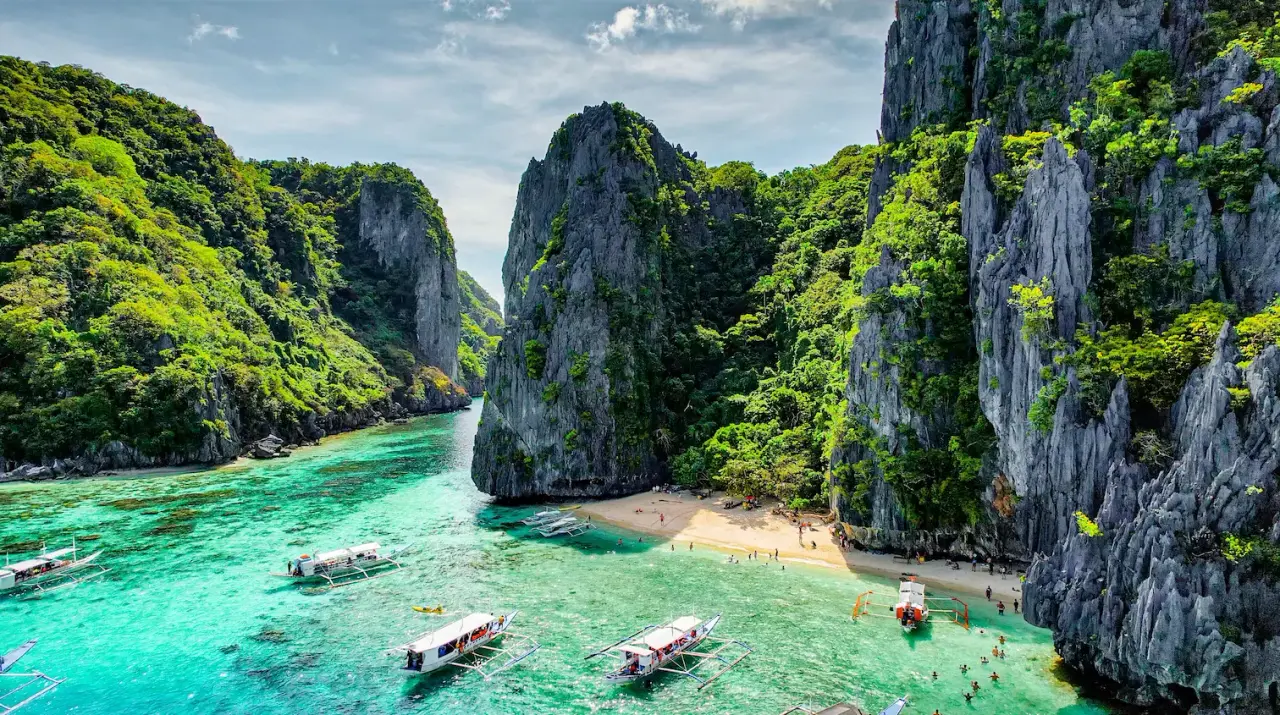
White-sand beaches, limestone lagoons, coral reefs and some of the friendliest people in Asia, plus a visa-free welcome for Indians. The Philippines has quietly become one of the easiest and best-value international trips you can take from India. This Philippines travel guide for Indians covers everything you need to plan it properly: the visa rules, how to fly there, what it really costs in rupees, when to go, how to choose between Boracay, Palawan, Cebu and Bohol, vegetarian food, and itineraries that work.
Short version: Indians can visit visa-free for 14 days (30 days with a valid US, UK or Schengen visa). Air India flies nonstop from Delhi to Manila in about 6 hours. A 7-8 day island-hopping trip costs roughly ₹1,10,000-1,60,000 per person including flights. The best weather is November to April. Here's the full picture.
Do Indians need a visa for the Philippines?
For a holiday, no. Since 8 June 2025, Indian passport holders can enter the Philippines visa-free for up to 14 days for tourism. If you hold a valid and current visa or residence permit from the USA, Japan, Australia, Canada, a Schengen country, Singapore or the UK, you get 30 days visa-free instead. Neither stay can be extended once you're there.
Visa-free doesn't mean document-free. At immigration, carry:
A passport valid for at least 6 months beyond your stay.
Confirmed hotel bookings and proof of funds, such as bank statements or an international card.
A confirmed return or onward ticket within your permitted stay.
Your eTravel QR code. eTravel is the free online arrival form at etravel.gov.ph, which you fill in within 72 hours before landing.
Trips longer than 14 days, transits and non-tourism visits still need an e-Visa. Our detailed guide to the Philippines visa for Indians covers both visa-free routes, eTravel, the e-Visa and the common mistakes that get travellers held up at the counter.
How to reach the Philippines from India
Air India started nonstop flights from Delhi to Manila in October 2025, with a flying time of roughly 6 hours. It's the simplest option if you're in North India or can connect through Delhi.
From Mumbai, Bengaluru, Chennai, Kolkata or Hyderabad, most travellers take a one-stop flight via Singapore, Bangkok, Kuala Lumpur or Hong Kong, with about 8-12 hours of total journey time depending on the layover. Return fares from India usually run about ₹30,000-55,000 in economy, and more over Christmas and New Year.
Manila (MNL) is the main gateway, but Cebu (CEB) is often the smarter arrival point if you're heading straight to the beaches, because it's closer to Bohol, Moalboal and Boracay. Between islands, you'll use short domestic flights (Manila to Caticlan for Boracay, or Manila to Busuanga for Coron) and fast ferries (Cebu to Bohol is about 2 hours).
Best time to visit the Philippines
December to February (cool and dry): the best weather of the year, with pleasant temperatures and calm seas. It's also peak season, so Christmas and New Year prices climb. Book early.
March to May (hot and dry): excellent beach and diving weather, and the water is at its clearest. It does get properly hot, around 32-35°C, which most Indians will find familiar.
June to October (rainy and typhoon season): cheaper and greener, but storms can cancel boat trips and flights, and Boracay's main beach gets choppy. If you go, keep spare days and buy travel insurance that covers weather disruption.
November: a good shoulder month as the rains ease, with lower prices before the December rush.
Tip: the Philippines is big, so weather varies by region. Always check the forecast from PAGASA, the Philippine weather agency, before your boat days.
Money: currency, budget and costs in rupees
The currency is the Philippine Peso (₱, PHP). As a rough guide, ₱100 ≈ ₹150. Carry some US dollars to exchange on arrival, because rupees are hard to exchange in the Philippines. An international debit or forex card works at ATMs, and cards are widely accepted in cities and resorts. Islands, boatmen and small eateries still run on cash.
For a 7-8 day trip, here's roughly where the money goes per person:
Return international flights: ₹30,000-55,000.
Domestic flights and ferries between islands: ₹8,000-20,000, depending on how many islands you cover.
Mid-range hotels and resorts: ₹3,500-8,000 per night per room. Beach resorts in Boracay and El Nido cost more in peak season.
Food: ₹1,500-3,000 per day. Local eateries are cheap, and resort and international restaurants cost more.
Island-hopping tours and activities: ₹10,000-20,000 for the trip.
Local fees: Boracay charges arriving tourists an environmental fee (₱300 for foreigners), a jetty terminal fee and a short boat fare. Budget around ₹800 per person.
All-in, that works out to roughly ₹1,10,000-1,60,000 per person for a comfortable mid-range trip including flights. A well-planned group tour often lands at the lower end, because hotels, transfers, boats and ferries are negotiated in bulk and the route is already worked out.
Where to go: choosing your islands
The Philippines has more than 7,000 islands, and the biggest first-timer mistake is trying to see too many. Pick two or three bases for a week, or three or four for ten days.
Manila
Most trips start here. Spend a day in Intramuros, the Spanish-era walled city, with Fort Santiago and San Agustin Church, then eat your way around the city. Makati and BGC are the modern, safe, walkable areas for hotels and restaurants. One or two nights is enough for most travellers.
Boracay
The famous one. White Beach is a 4 km stretch of powdery sand with calm water in the dry season, sunset sailing on paraw boats, island-hopping to Crystal Cove and Puka Beach, and lively evenings. It's the best pick for couples, friends and first-timers who want an easy beach holiday. Fly Manila or Cebu to Caticlan, then take a 15-minute boat.
Palawan: El Nido and Coron
This is the Philippines of postcards: towering limestone cliffs, hidden lagoons, turquoise water and shipwreck dives. El Nido is best for lagoon-hopping, and Coron for Kayangan Lake, Twin Lagoon and WWII wrecks. It's a little harder to reach, but it's the highlight of many trips. Allow at least three nights.
Cebu and Moalboal
Cebu is a great hub with real adventure on its doorstep. Moalboal has the famous sardine run, millions of fish just off the beach and easy to snorkel, while Kawasan Falls offers canyoneering: jumping, swimming and sliding down turquoise river gorges. Cebu City adds Spanish-era heritage, including Magellan's Cross.
Bohol
A short ferry from Cebu brings you to the Chocolate Hills, the tiny tarsiers at the Tarsier Sanctuary, and a lunch cruise on the Loboc River. Panglao Island has good beaches and diving. It's ideal for families and a gentle change of pace from beach days.
Siargao
The Philippines' surf island has a laid-back, palm-forest vibe. It's great for a younger crowd and a second trip, but less suited to a first visit with limited days.
Food in the Philippines for Indians (including vegetarian)
Filipino food is delicious but very meat- and seafood-heavy. Signature dishes include adobo (meat braised in vinegar and soy), lechon (roast pig), sinigang (a sour tamarind soup) and endless grilled seafood. Many sauces and "vegetable" dishes use fish sauce (patis) or shrimp paste (bagoong), so vegetarians need to ask.
Learn one phrase: "walang karne, walang isda" means "no meat, no fish". Ask for no fish sauce and no shrimp paste too.
Easy veg options: steamed rice, pinakbet or chop suey made without meat or paste, fresh lumpia (spring rolls), tofu dishes and superb tropical fruit. The mangoes are famous.
Indian restaurants: Manila (especially Makati and BGC), Cebu and Boracay all have Indian restaurants, so dal-chawal is never far away.
Jain and no-onion-garlic travellers will find it hardest. Carry ready-to-eat food from home and tell your hotel or tour operator in advance.
Practical tips for Indian travellers
English is everywhere. It's an official language, so signs, menus and conversations are easy. This is one of the most stress-free Asian countries for Indians.
SIM and data: Philippine SIMs must be registered by law. Tourists register with a passport and a return ticket, and a tourist SIM stays valid for 30 days. An eSIM bought before you fly is often simpler.
Plugs: 220V, with Type A, B and C sockets. Indian three-pin plugs won't fit, so carry a universal adapter.
Getting around: use Grab (the local Uber) in cities. On islands, tricycles and e-trikes are cheap, so agree the fare before you get in.
Travel insurance: strongly recommended, especially with boat days and the risk of weather delays.
Safety: the main tourist areas (Manila's business districts, Boracay, Palawan, Cebu and Bohol) are generally safe with normal precautions. Avoid the areas that governments advise against, mainly parts of western Mindanao and the Sulu archipelago, and check the latest advisories before you travel.
Reef-safe habits: don't touch coral or feed fish, use reef-safe sunscreen, and choose wildlife experiences that don't involve feeding or handling animals.
Suggested Philippines itineraries from India
7-8 days, the classic first trip: Manila, then Boracay, then Cebu and Moalboal, then Bohol. You get heritage, the best beach, adventure and the Chocolate Hills in one smooth loop. Our group tour Pearl of the Orient: Philippines follows exactly this route in 7 nights, with hotels, ferries, transfers, island-hopping and a VacMode trip leader all arranged.
9-10 days, the lagoons and islands trip: Manila, then Coron in Palawan, then Bohol, then Cebu. This swaps Boracay's beach scene for Palawan's limestone lagoons. Our private tour Pearl of the Orient: Ultimate Philippines Island Adventure covers this route over 9 nights on your own dates.
5 days, the short escape: fly into Cebu and split your time between Moalboal and Bohol, or do a straight Boracay beach break. It's perfect for a long weekend plus a few leave days.
All of these fit comfortably within the 14-day visa-free limit. Just make sure your return flight is booked inside it. Want a different mix of islands? You can customise a Philippines trip around your dates and budget. You can also browse all our group tours and private tours, or check upcoming departures on the tour calendar.
Final word
The Philippines gives Indian travellers a rare combination: visa-free entry, English everywhere, a short flight, and beaches and lagoons that rival anywhere in the world, at a fraction of the cost of the Maldives or Europe. Pick your season, choose two or three islands rather than ten, sort out your documents and eTravel, and plan around the food if you're vegetarian. Before you book, read our Philippines visa guide for Indians so there are no surprises at immigration. When you're ready, talk to our Philippines travel experts. We help Indian couples, families and friends plan this trip the right way.
Frequently Asked Questions
Do Indians need a visa for the Philippines?
Not for a short holiday. Indian passport holders can visit the Philippines visa-free for up to 14 days for tourism, or up to 30 days if they hold a valid US, UK, Schengen, Japanese, Australian, Canadian or Singapore visa or residence permit. Neither stay can be extended. You need a passport valid for six months, a confirmed hotel booking, proof of funds, a return ticket and the free eTravel registration.
How much does a Philippines trip cost from India?
For a 7-8 day trip, budget roughly ₹1,10,000-1,60,000 per person all-in, including international flights, domestic flights between islands, mid-range hotels, food and activities. Return flights from India usually cost about ₹30,000-55,000. Island-hopping trips cost more than a Manila-only visit because each island usually needs a domestic flight or ferry.
Are there direct flights from India to the Philippines?
Yes. Air India started nonstop Delhi-Manila flights in October 2025, with a flying time of roughly 6 hours. From other Indian cities, or for more schedule choice, most travellers connect via Singapore, Bangkok, Kuala Lumpur or Hong Kong. Check the current schedule when you book, as frequencies change by season.
What is the best time for Indians to visit the Philippines?
The dry season, roughly November to April, is the best time. December to February is the coolest and most comfortable stretch, while March to May is hotter but still dry and good for beaches. June to October is the rainy and typhoon season, when boat trips can be cancelled and some beaches get rough, though prices are lower.
Is the Philippines good for vegetarian Indian travellers?
It needs some planning. Filipino food is heavily meat- and seafood-based, and many dishes use fish sauce or shrimp paste. Rice, fresh fruit, vegetable dishes cooked to order and international restaurants make it manageable, and Manila, Cebu and Boracay all have Indian restaurants. Jain travellers should carry some food from home.
Which islands should first-timers visit in the Philippines?
For a first trip of 7-10 days, pick two or three bases. Boracay is best for beaches and nightlife, Palawan (El Nido or Coron) for dramatic lagoons and island hopping, Cebu for snorkelling and waterfalls, and Bohol for the Chocolate Hills and tarsiers. Add a day or two in Manila for history and food.
Made it to the end?