
 WhatsApp Us
Beyond the Bloom: The Real Best Time to Visit Japan in 2026
The "Sweet Spot" Seasons: May, October, and November
If you want the absolute best balance of pleasant weather, manageable crowds, and good value, look no further than the shoulder seasons.
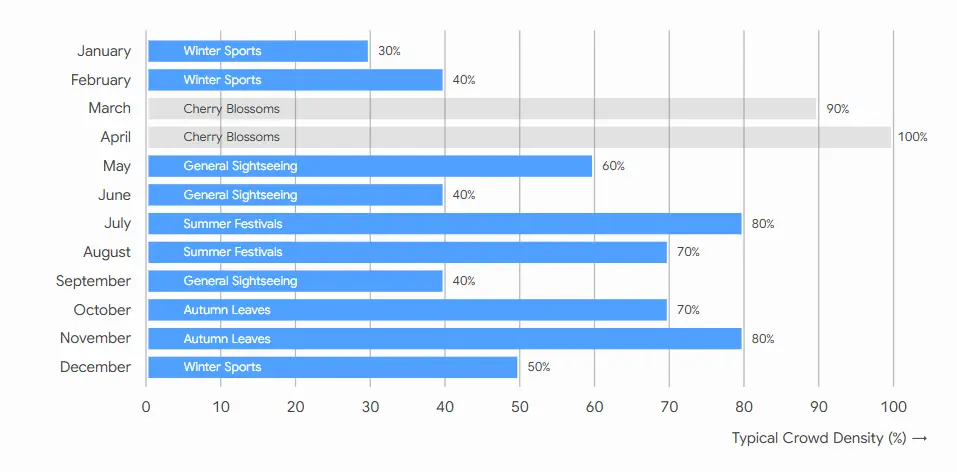
May (Post-Golden Week): Once the intense domestic travel period of Golden Week ends (around May 6), May becomes the best overall month to visit. The weather is warm and dry, the landscapes are lush and green, and you beat the oppressive summer heat and humidity.
October & November: Autumn rivals spring as the most beautiful time in Japan. By October, the summer heat has broken, leaving cool, clear skies. As you move into November, the country erupts in stunning red and gold foliage (known as momijigari).
To help you visualize how these factors overlap, use this interactive explorer to find the perfect month based on what matters most to you:
Japan Seasonal Planner
Goal-Oriented Travel: When to go for What
Your perfect timing depends entirely on your travel goals. Here is the breakdown for specific experiences:
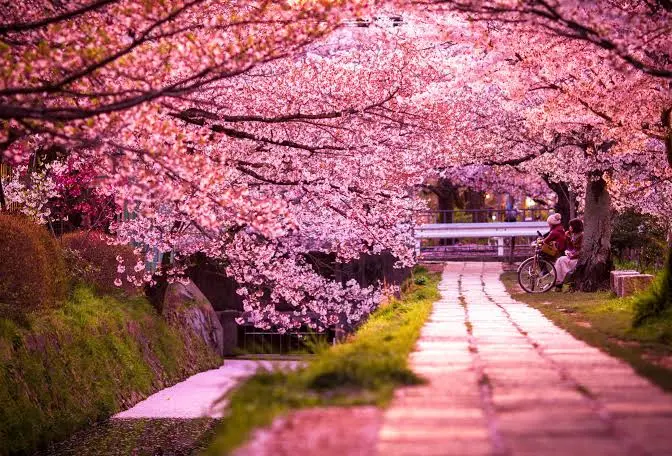
For the Sakura Chasers (Late March – Mid-April)
If seeing the iconic cherry blossoms is a non-negotiable bucket-list item, you need to target late March through mid-April.
The Reality Check: This is peak tourist season. You will be sharing the views with massive crowds, and you need to book your hotels 3 to 6 months in advance.
Pro-Tip: If you miss the bloom in Tokyo and Kyoto, you can head north to Hokkaido, where the blossoms don't peak until late April or early May.
For the Autumn Aesthetes (Late October – November)
Many travelers argue that autumn actually beats spring. Kyoto's temples framed by fiery red maple leaves are unforgettable.
The Reality Check: Like spring, this is a highly popular time, particularly in Kyoto, which peaks in mid-to-late November.
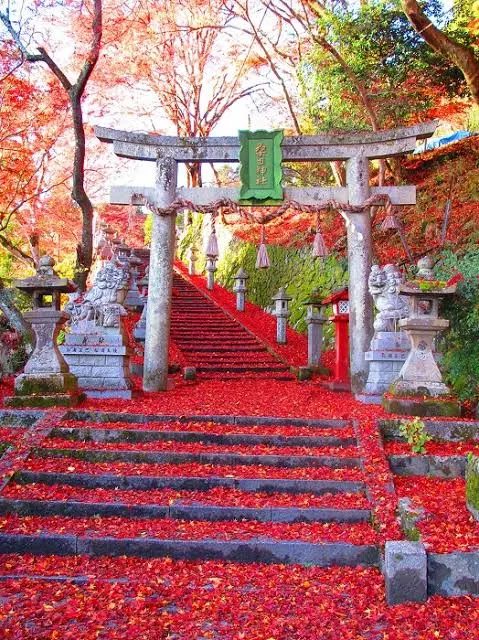
Autumn foliage at a Kyoto temple. Source: Another Kyoto
For the Budget & Solitude Seekers (January – February)
Want to experience Japan without the suffocating crowds? Go in the dead of winter.
The Perks: Flight and hotel prices drop significantly. It is the absolute best time for skiing in Hokkaido or Nagano, visiting snow monkeys, and soaking in outdoor hot springs (onsen) while snow falls. Plus, the crisp winter air offers the clearest, most reliable views of Mount Fuji.
The "Avoid" List: Dates to Skip
Unless you have unlimited patience and a massive budget, you should strongly consider avoiding these three major Japanese holiday periods when domestic travel completely overwhelms the infrastructure:
Golden Week (April 29 – May 6): A cluster of national holidays. Trains are packed, and hotel prices can double or triple.
Obon (Mid-August): A traditional period honoring the spirits of ancestors. Many businesses close, and transit is heavily congested. Plus, August brings sweltering, humid heat (often over 35°C / 95°F).
New Year (Late December – Early January): Many shops, restaurants, and attractions close down for several days to ring in the new year.
The Bottom Line: Don't let the fear of missing the cherry blossoms dictate your trip. Traveling in the shoulder seasons of May or October offers a much more relaxing, affordable, and deeply enjoyable Japanese adventure.
Made it to the end?